

If you are in the home appliance industry—whether you are a product designer, manufacturer, or a DIY enthusiast looking to repair or upgrade appliances—choosing the right push button switch is more important than you might think.
These small components act as the bridge between users and appliances. A faulty switch can not only damage the user experience and lead to product returns, but may even pose safety risks. With so many types, specifications, and brands available on the market, how do you select the right one for your appliance and target users?
1. First: Understand the Role of Push Button Switches in Home Appliances
Start by clarifying the core role of push button switches in this application. Unlike industrial switches, those used in home appliances must balance three key factors: reliability, ease of use, and safety.
Consider this: a coffee machine switch may be pressed once a day, while a washing machine switch may be used dozens of times per week. An oven switch must be easy for adults to operate while preventing accidental activation by children. Every appliance has unique requirements, and your switch selection must align with them.
In addition, with the rise of smart home appliances, push button switches are no longer just simple “on/off” tools. Many switches now need to integrate with smart systems, provide precise feedback, or withstand harsh environments such as bathroom humidity or high oven temperatures. This guide covers both traditional and smart appliance applications, helping you find suitable solutions for different scenarios.
2. Key Factors in Push Button Switch Selection
Below are the most critical selection criteria—these factors directly determine whether your switch choice will be successful.
(1). Switch Type: Match the Appliance Function:
Not all push button switches are the same. The type you choose depends on how users interact with the appliance. Below are the most common switch types used in home appliances and their typical applications:
Tactile Switch:
This is the most common type—for example, the “Start” button on a microwave or the power button on a toaster. It provides a clear “click” feedback when pressed, allowing users to confirm that the action has been triggered. For tactile switches, a lifespan of at least 100,000 cycles is recommended (for high-frequency appliances like washing machines, a longer lifespan is required).
Touch Switch:
Ideal for modern, minimalist appliances such as smart refrigerators, induction cookers, and air purifiers. It has no moving parts, is easy to clean, and offers a sleek, high-tech appearance. However, it is sensitive—unless properly waterproofed, it should not be used in humid environments like bathrooms.
Toggle Switch:
Less commonly used in modern appliances, but still suitable for devices that require a maintained ON/OFF state, such as fans and heaters. It is highly durable but relatively bulky, making it less suitable for compact appliances like blenders or coffee machines.
Membrane Switch:
Thin and flexible, commonly used in appliances with control panels such as microwaves, dishwashers, and washing machines. It offers water and dust resistance and can include printed labels (e.g., “Defrost,” “Spin”). Its tactile feel is softer than that of tactile switches, making it suitable for appliances requiring multiple button inputs. It is important to ensure the switch rating matches the environment—for example, membrane switches used in dishwashers must withstand high humidity and occasional splashes.
Practical Tip:
For high-frequency appliances (such as washing machines and ovens), prioritize tactile or membrane switches—they are more durable and provide better user feedback. For smart or premium appliances, touch switches can enhance product design, but their usability should always be tested first.
(2). Environmental Rating: Resistance to Water, Heat, and Dust
Home appliances operate in various environments—from hot kitchens (dishwashers, ovens), humid bathrooms (hair dryers, electric shavers), to dusty garages (heaters, vacuum cleaners). The switch must withstand these conditions; otherwise, it may fail prematurely or even create safety risks.
The key indicator here is the IP (Ingress Protection) rating. This two-digit rating represents the switch’s resistance to solid objects (first digit) and liquids (second digit). For home appliances, the following ratings are commonly used:
-
IP44: Protection against splashing water (suitable for kitchen appliances such as blenders and coffee machines)
-
IP54: Dust protection and splash resistance (suitable for washing machines, dishwashers, air conditioners)
-
IP65: Dust-tight and resistant to low-pressure water jets (suitable for bathroom appliances such as hair dryers and electric toothbrushes)
-
IP67: Dust-tight and protected against immersion in up to 1 meter of water for 30 minutes (rarely required in household applications, mainly for outdoor appliances such as patio heaters)
- In addition, temperature resistance must be considered. Switches used in ovens or toasters must withstand high temperatures (up to 100°C or higher), while those used in refrigerators must operate reliably at low temperatures (down to -10°C or below). Always verify the temperature rating to ensure compatibility with the appliance environment—this is often overlooked but critical for long-term reliability.

The ONPOW LAS1-AGQ series push button switches feature a standard IP65 rating, with customizable IP67 high-protection options. The LAS1-AGQ16 model can reach IP68, effectively preventing the ingress of water and oil, thereby reducing the risk of switch failure.
(3). Electrical Parameters: Do Not Overlook Voltage and Current
This is a common area where mistakes occur. A switch suitable for small appliances (such as phone chargers) cannot be used for large appliances (such as washing machines), mainly due to differences in voltage and current.
Voltage Rating:
Most home appliances operate at either 120V (North America) or 230V (Europe and Asia). Ensure that the switch voltage rating matches the appliance. Using a switch with a lower rating may lead to overheating or short circuits.
Current Rating:
This indicates the maximum current the switch can handle. Small appliances (such as blenders and toasters) typically require switches rated at 5A–10A, while larger appliances (such as washing machines and ovens) require 15A–20A switches.
If the switch is used to control a motor (such as in a washing machine), it must have a motor load rating, as motors generate higher startup currents that ordinary switches may not withstand.
Practical Tip:
Choose a switch with voltage and current ratings slightly higher than the appliance’s maximum requirements to provide a safety margin and extend service life. For example, if the appliance requires a 120V/10A switch, consider using a 125V/15A model.

(4). User Experience: Ensure Ease of Use for Everyone
Ultimately, switches are designed for users. If a switch is difficult to press, confusing to operate, or inconvenient, it will negatively impact the product’s reputation.
Key considerations include:
Actuation Force:
The switch should be easy to press but not overly sensitive to prevent accidental activation. For most home appliances, an actuation force of 100–200g is ideal—this ensures ease of use for children, elderly users, and those with limited hand strength.
Feedback:
Users need clear confirmation that the switch has been activated. Tactile switches provide a physical “click,” touch switches often include sound or LED indicators, and membrane switches offer softer but still noticeable feedback. Avoid switches with no feedback, as users may press repeatedly and potentially damage the switch or appliance.
Size and Installation Position:
The switch size should match the appliance design and be easy to reach. For example, a coffee machine switch should be positioned on the front at a comfortable height, while a toaster switch should be large enough to be pressed easily with a finger. Avoid small switches on appliances commonly used by elderly users.
The ONPOW LAS1-AGQ series offers a wide range of mounting hole sizes, multiple configurations such as push buttons, emergency stop buttons, and selector switches, and supports LED indicators, making it suitable for various appliance panel designs.
(5). Durability and Lifespan: More Cost-Effective in the Long Run
Home appliances typically last for many years, so switches must be equally durable. Switch lifespan is measured in actuation cycles, also known as mechanical life.
-
Basic appliances (toasters, blenders): 100,000–500,000 cycles
-
High-frequency appliances (washing machines, ovens): 1,000,000 cycles or more
Material quality is also important. Contacts made of silver or gold are more durable and corrosion-resistant than brass or copper, while housings should use heat-resistant plastics such as ABS or PC to prevent deformation or melting.
Avoid low-cost switches. While they may reduce initial costs, they are more likely to fail quickly, leading to product returns and customer dissatisfaction.
The ONPOW LAS1-AGQ series offers a mechanical lifespan of over 1 million cycles and uses silver alloy contacts to ensure stable electrical performance and long-term durability, making it suitable for frequent daily use.

(6). Compliance and Safety: Meet Industry Standards
Safety in the home appliance industry is non-negotiable. Switches must comply with local standards to be sold in specific markets.
Common certifications include:
-
North America: UL (Underwriters Laboratories) or CSA (Canadian Standards Association)
-
Europe: CE certification, including compliance with RoHS and REACH regulations
-
Global: IEC standards, widely recognized worldwide
These certifications ensure that switches are safe, environmentally compliant, and meet strict performance requirements. Skipping this step may lead to legal issues, product recalls, and damage to brand reputation.
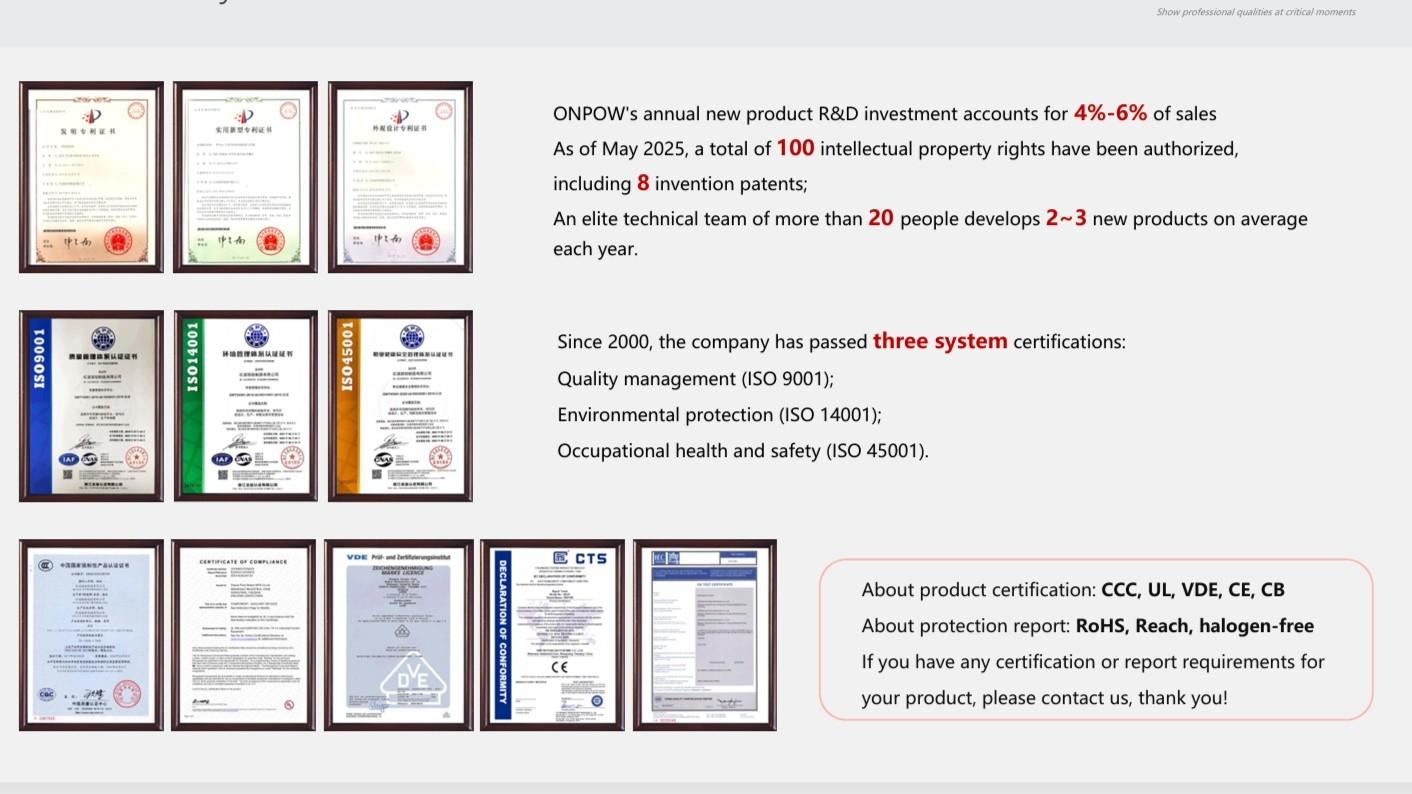
The ONPOW LAS1-AGQ series push button switches are certified with CCC, UL, VDE, CE, and other major standards.
Common Mistakes and How to Avoid Them
Ignoring environmental ratings: Using a non-waterproof switch in a dishwasher can lead to short circuits. Always check IP ratings and temperature resistance.
Incorrect voltage/current matching: This poses serious safety risks. Always verify appliance parameters carefully.
Overlooking user experience: Difficult or unresponsive switches frustrate users. Always test with real users before finalizing.
Ignoring compliance: Non-certified switches cannot be sold in most markets. Never skip certification checks.
Final Selection Tips
- · Define appliance function and user requirements (usage frequency, environment)
- · Choose the appropriate switch type (tactile, touch, membrane, toggle)
- · Check IP rating and temperature resistance
- Ensure sufficient voltage and current ratings (with safety margin)
- Prioritize durability (mechanical life, material quality)
- Verify compliance with local safety standards
Although small in size, push button switches have a significant impact on overall product quality and user experience. Taking the time to choose the right switch will result in fewer returns, more satisfied users, and stronger brand competitiveness.
If you are still unsure which switch to choose, consider consulting a switch manufacturer or supplier. They can help you identify the most suitable solution for your application. Before mass production, always test the switch under real-world conditions.



